Myth and Silver
November 17, 2026 Asian Arms
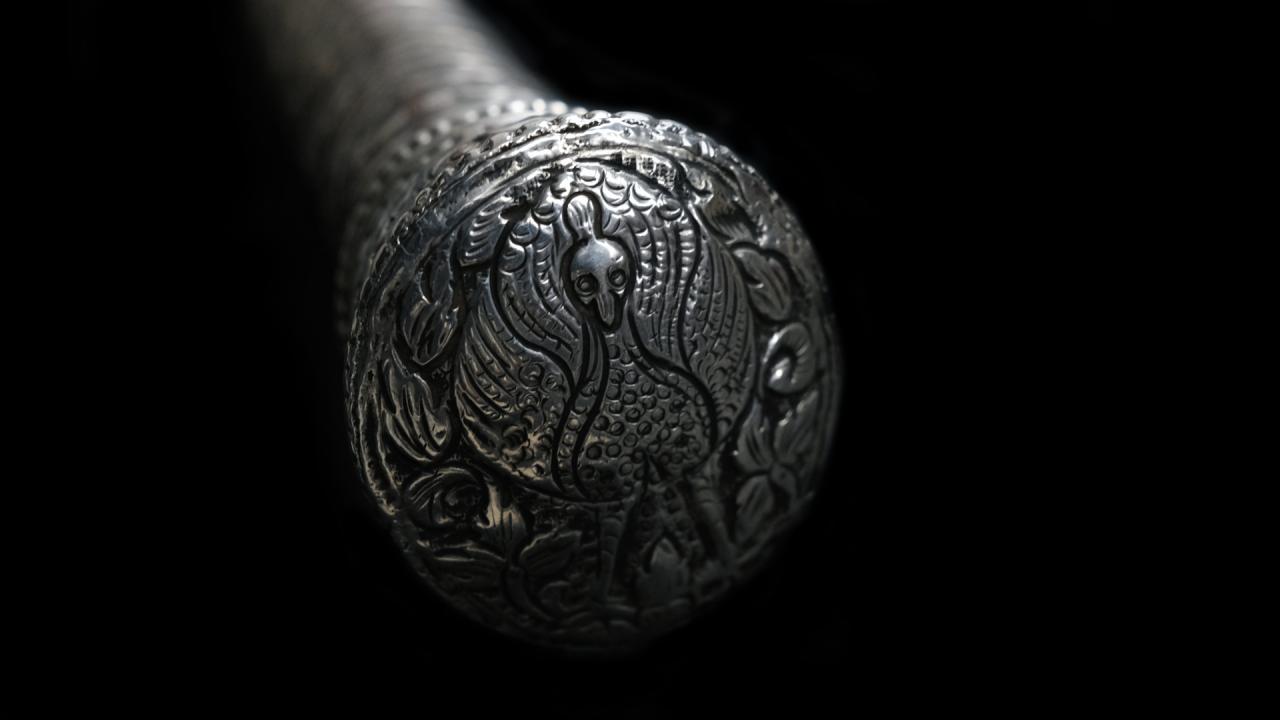
Mythical creatures have a long history in South East Asia and touch on many aspects of art and culture. Rarely however is it illustrated as clearly as in this silver dha from Luang Prabang in Laos, where silver dha were made to a specific pattern in the second half of the 19th century into the early 20th. Typically these feature a flat pommel cap with a depiction of an animal in repousse. At this time the Kingdom of Luang Prabang was a vassal state to Siam, having been first occupied in the 1790s but allowed a degree of autonomy by Bangkok. By the reign of Chantharath (r. 1850-1868) Luang Prabang faced serious pressure from Haw Chinese incursions and the simmering tensions and conflicts between Siam, Vietnam and the very growing French presence in the region.
The example below is one previously in my collection and the typical form encountered. In this case with a peacock depicted on the pommel.
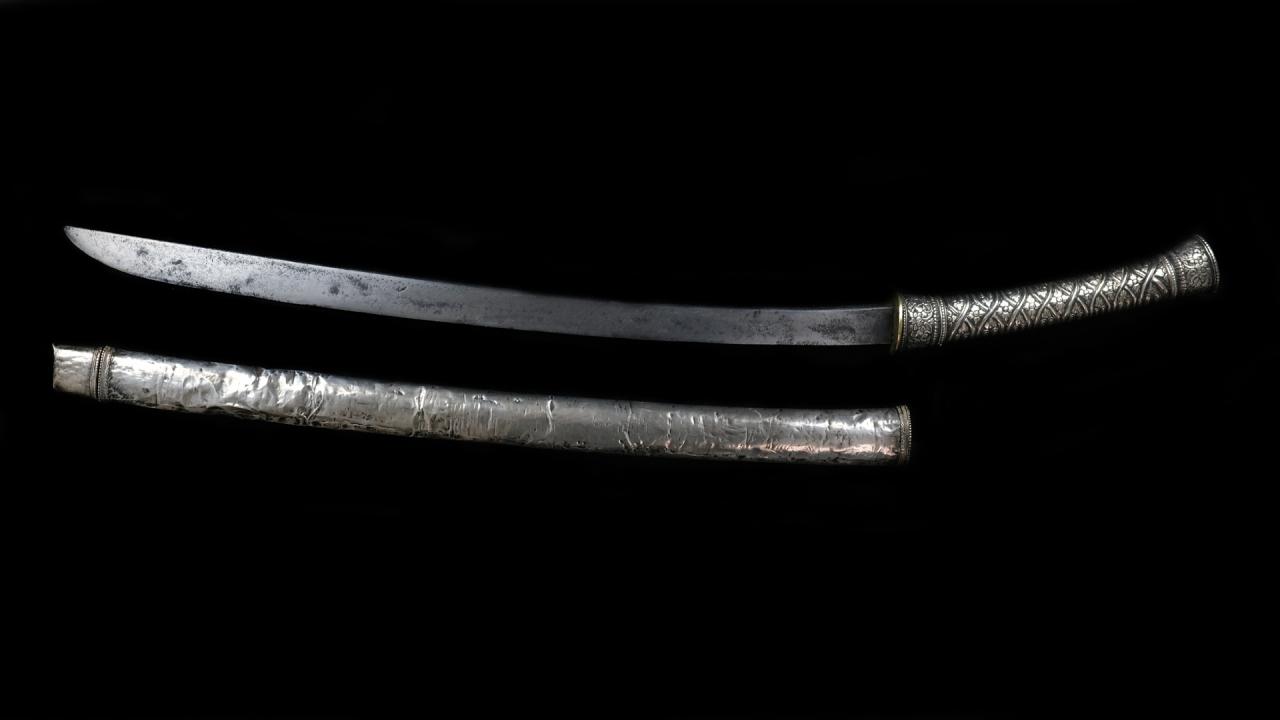
This example goes against the common form and also depicts a creature I have not seen featured on any other sword to date. Swords like this were produced by royal workshops, a mark of status for the owner and a symbol of their rank. I do not collect this type of dha, however this example, although it has since joined another collector, was unique enough that I wanted to spend time handling and documenting it.
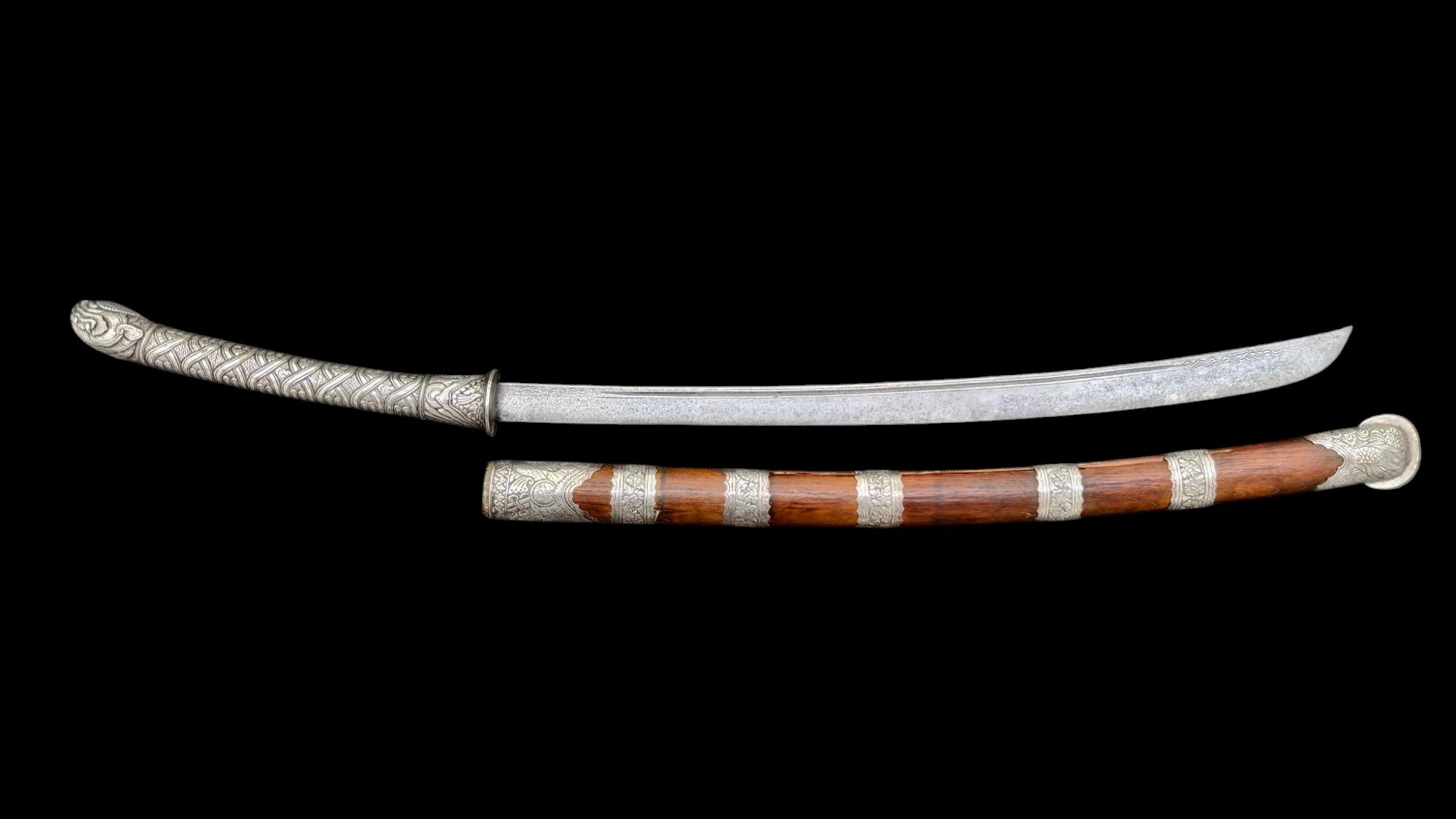
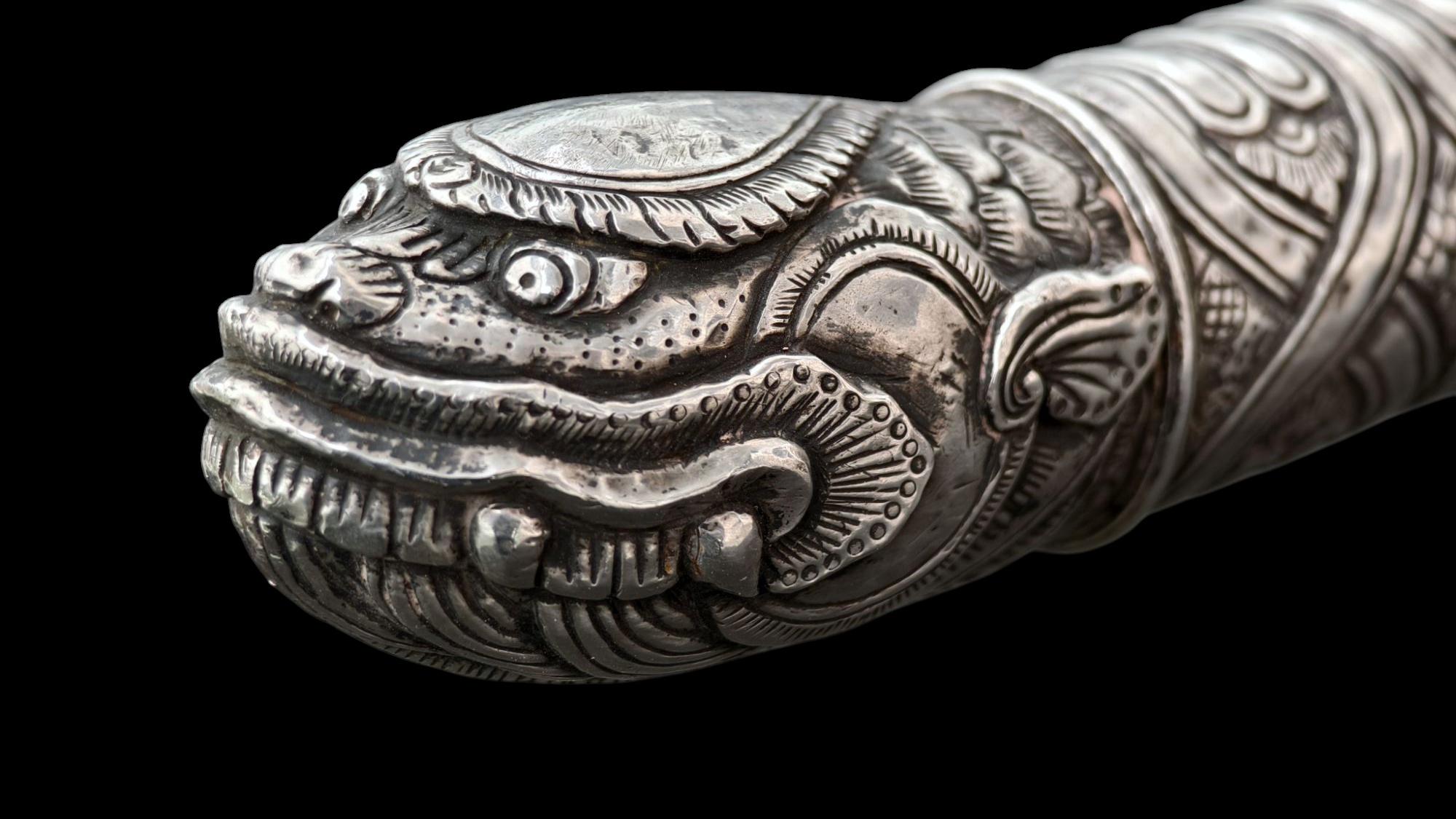
The entire sword is themed around the mythical creatures known as a mucha wan, part of the Himmmapan forest pantheon of creatures in Hindu and Buddhist mythology. In these Thai/Laos context the Himmapan forest is best known from theTraibhumikatha legend written by the early Sukhothai monarch Maha Thammaracha I. The Himmapan Forest is filled with creatures that are combined from two different animals. The Mucha Wan being a combination of a fish and a seal (or whale). For this reason the face of the creature displays whisker-like elements, a clear nose, and a flat plate on the head, while the body and tail are scaled and fish-like.
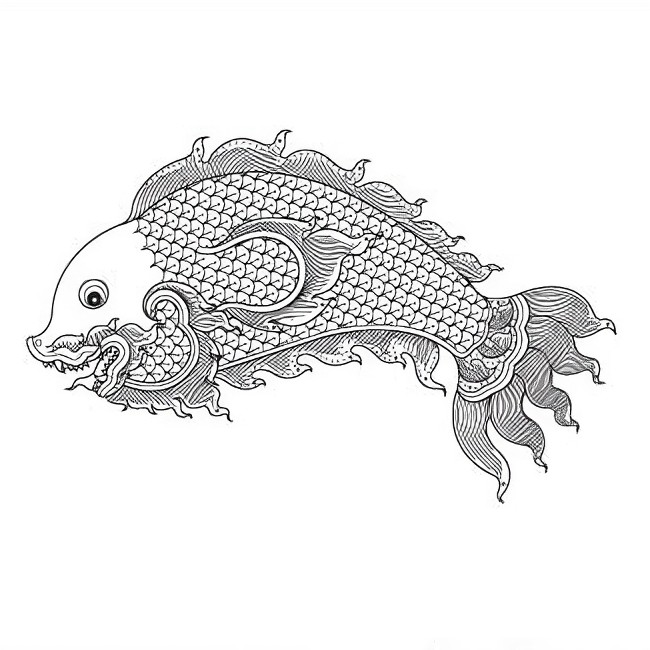
This motif is clearly seen in the pommel and the rest of the fittings, with some of the best repousse work I have seen a sword like this.
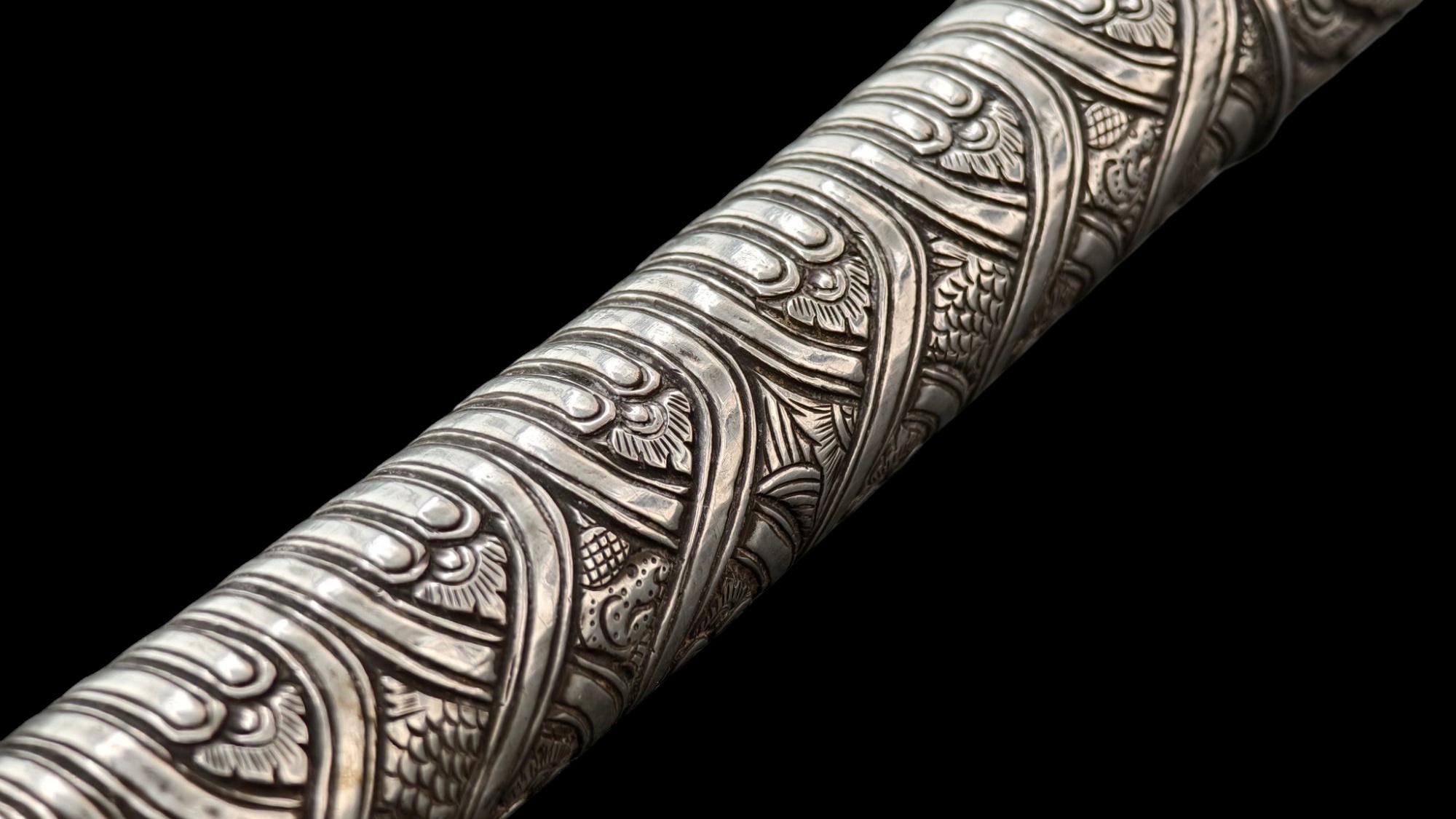
One of the main characteristics of this sword sub-type is the style of the grip. It invariably shows the 'loop' or 'cord' like decoration with usually a floral decorative element in-between representing a lamduan.
In this case, the mucha wan motif is not simply confined to the pommel but in fact continues throughout the handle. The detail shows rather than lamduan flowers small renditions of the Mucha Wan and scales.
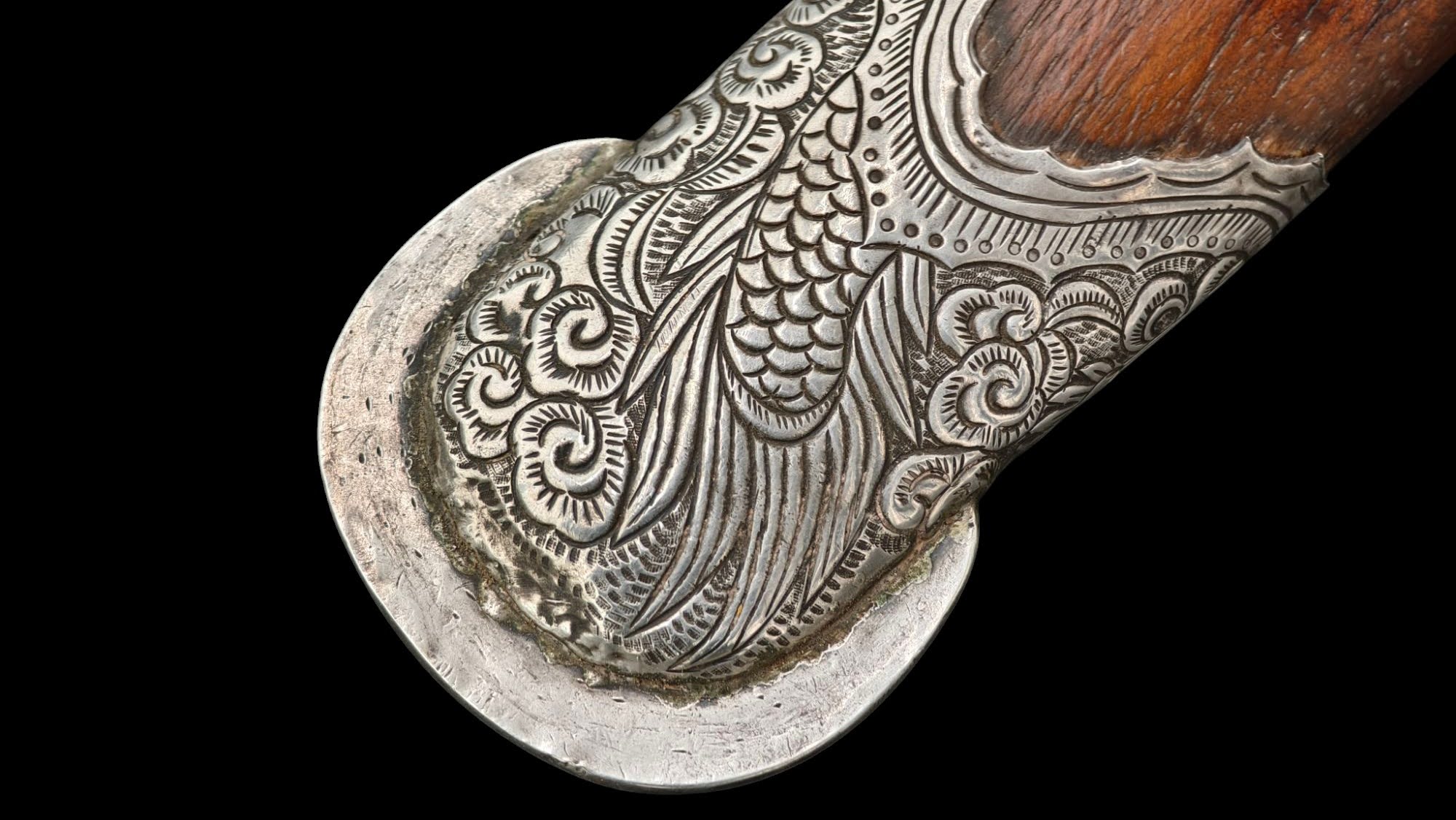
Some floral elements do remain, but even in the scabbard mounts the Mucha Wan motif is maintained and the scabbard drag forms the fish tail of the creature.
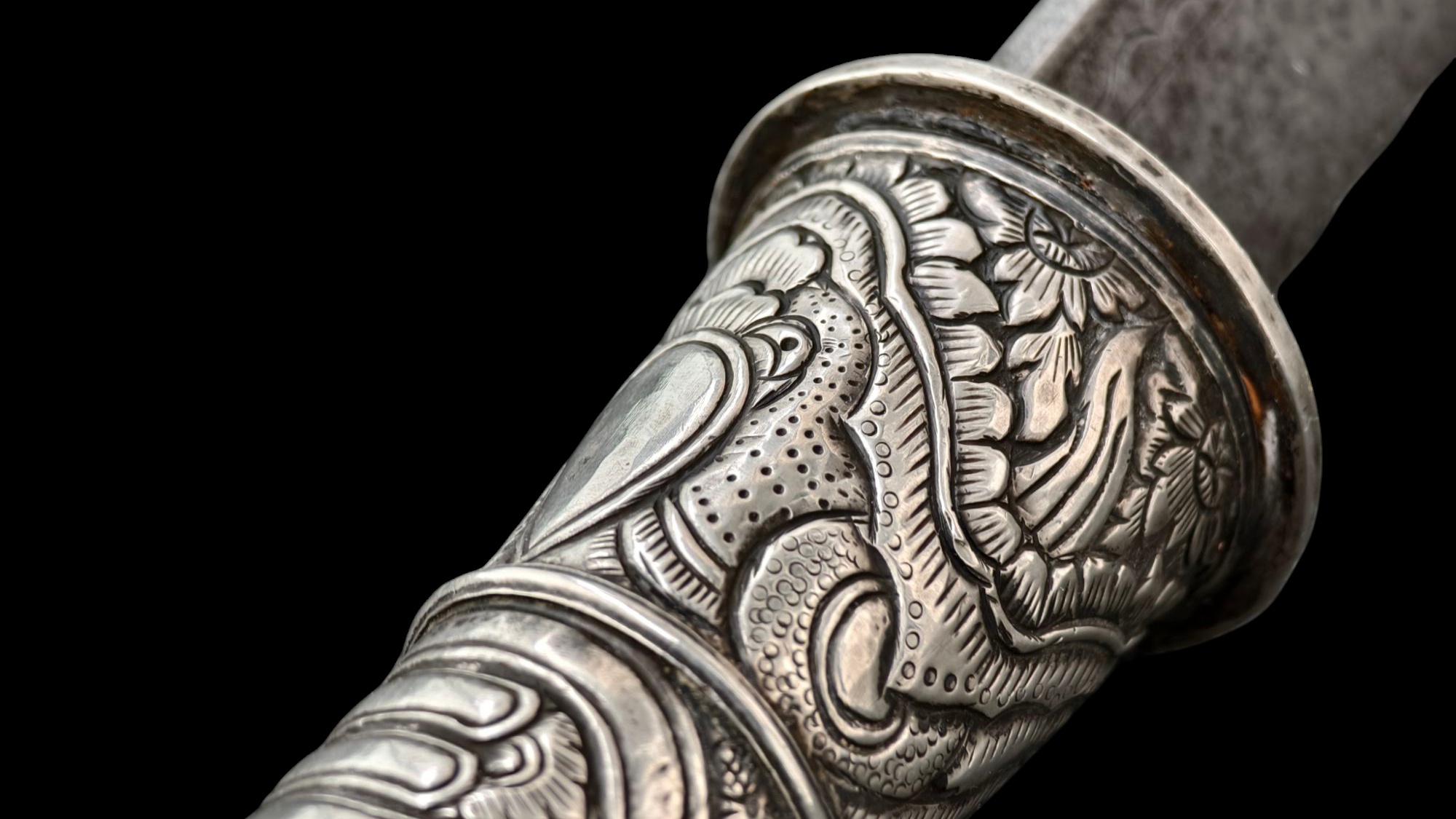
The mucha wan theme continues at the guard, with an open mouth depiction showing the characteristic toothy mouth and extended tongue.
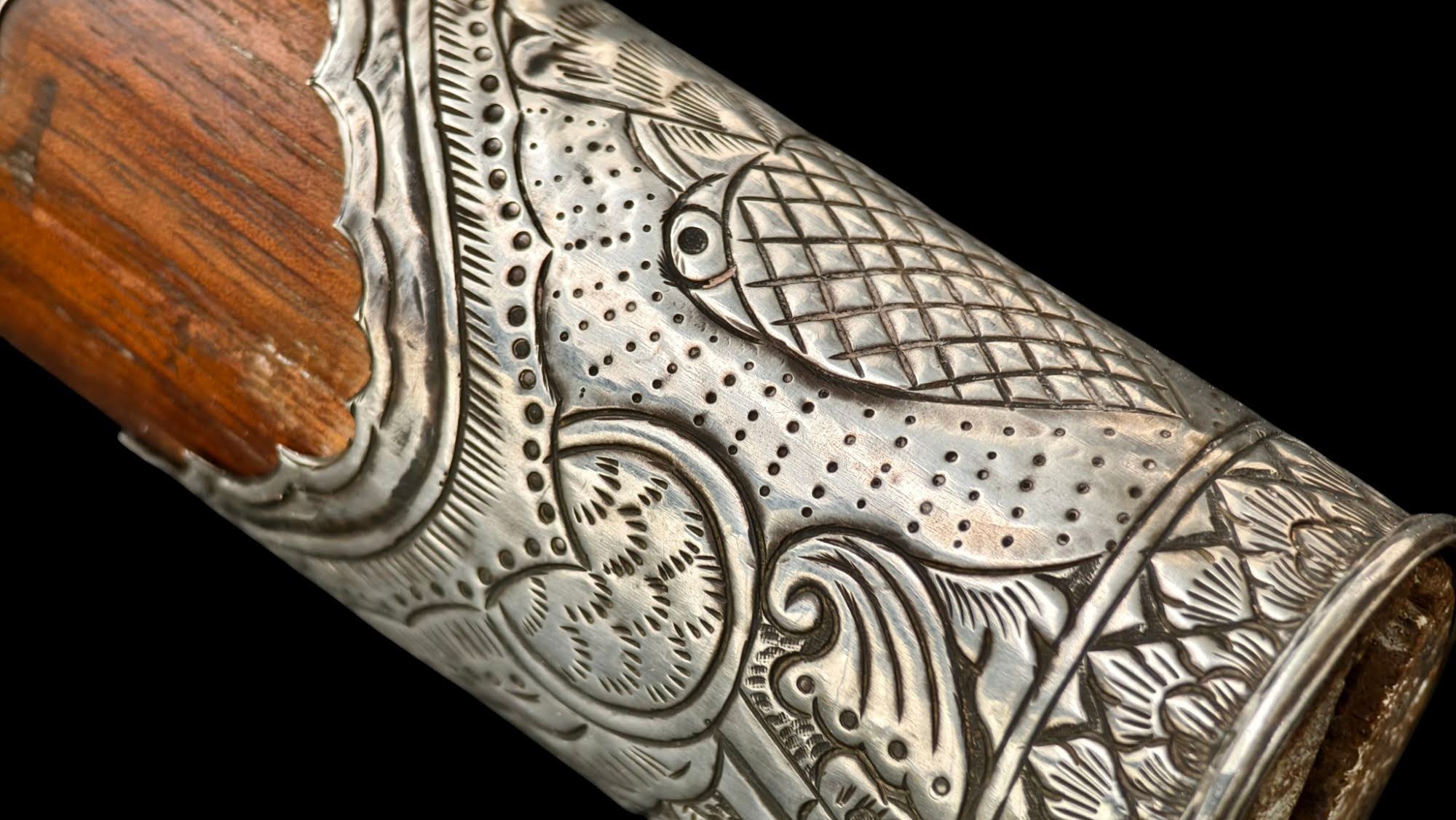
The chape clearly shows the fish like tail of the creature.
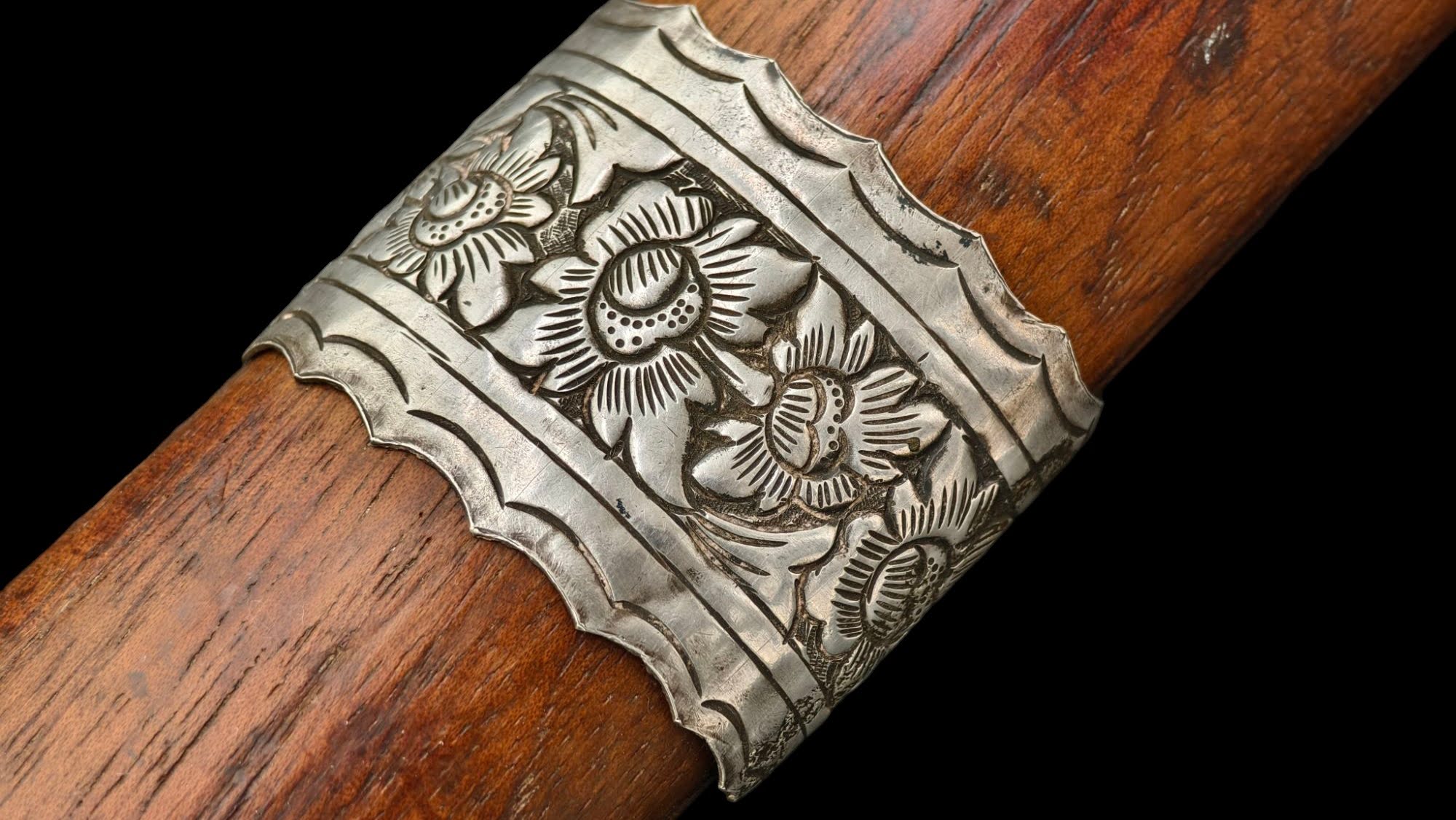
While the bands retain the floral elements.
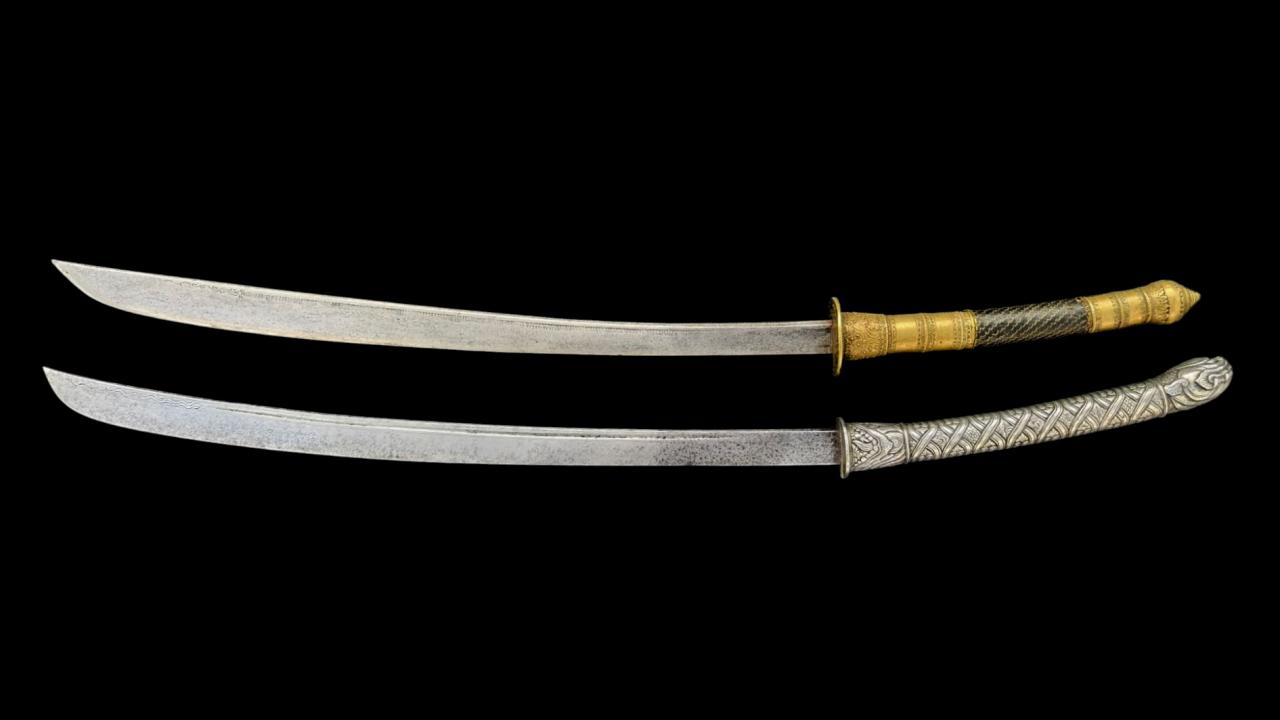
The blade is typical of Lao work and a type seen in both so called Luang Prabang and Vientiane dha types. Characterized by narrow waists and often deep bellies, incised line decoration is also common and small fullers. Overall, this is a large sword at nearly 100cm.
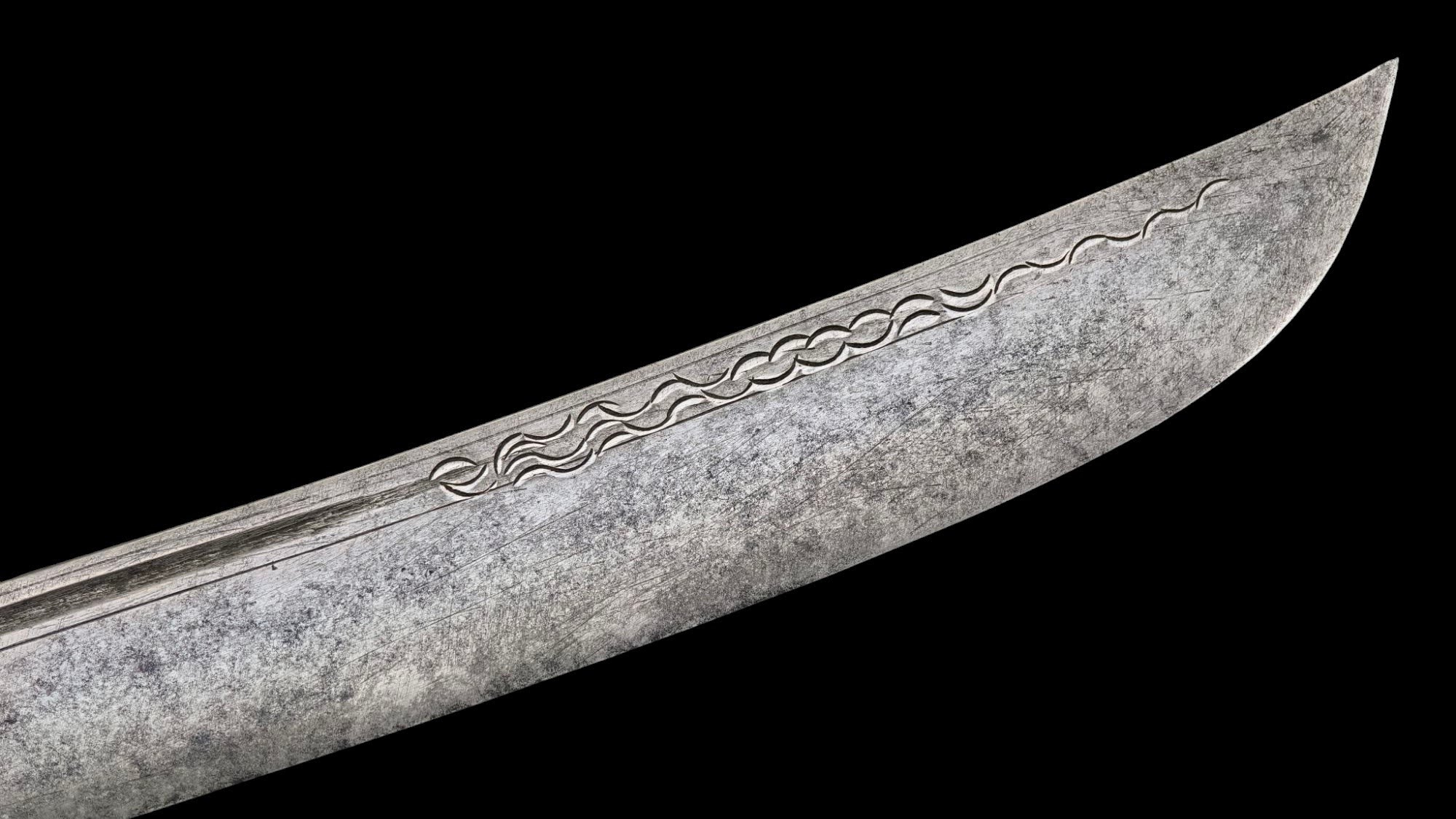
We can only speculate about who owned this piece, why they commissioned it with this motif and under exactly what rank it was carried. However, it is unique in my experience and so far I have not uncovered another similar example or found anything close through friends in the broader daab/dha collecting community in the region. It is very possible it is something of a 'once off'.
If I was to speculate, given the somewhat water based theme, it could be the case it was owned by someone connected to the considerable importance of waterways in the region and perhaps the river navy.
It may also reflect a personal connection the owner felt with this creature and the associated mythology. The mucha wan is essentially a leviathan who inhabited the vast oceans and rivers bordering the Himmapan forest at the base of Mount Meru. My understanding is that it can be found in the temple decoration of sites like Wat Xieng Thong in Luang Prabang and variations of similar Himmapan creatures often feature in funeral rituals to symbolize the journey of the deceased person's merit through the cosmos realm. It is deeply entwined with Theravada Buddhism and Luang Prabang is the heart and soul of Buddhism in Laos.
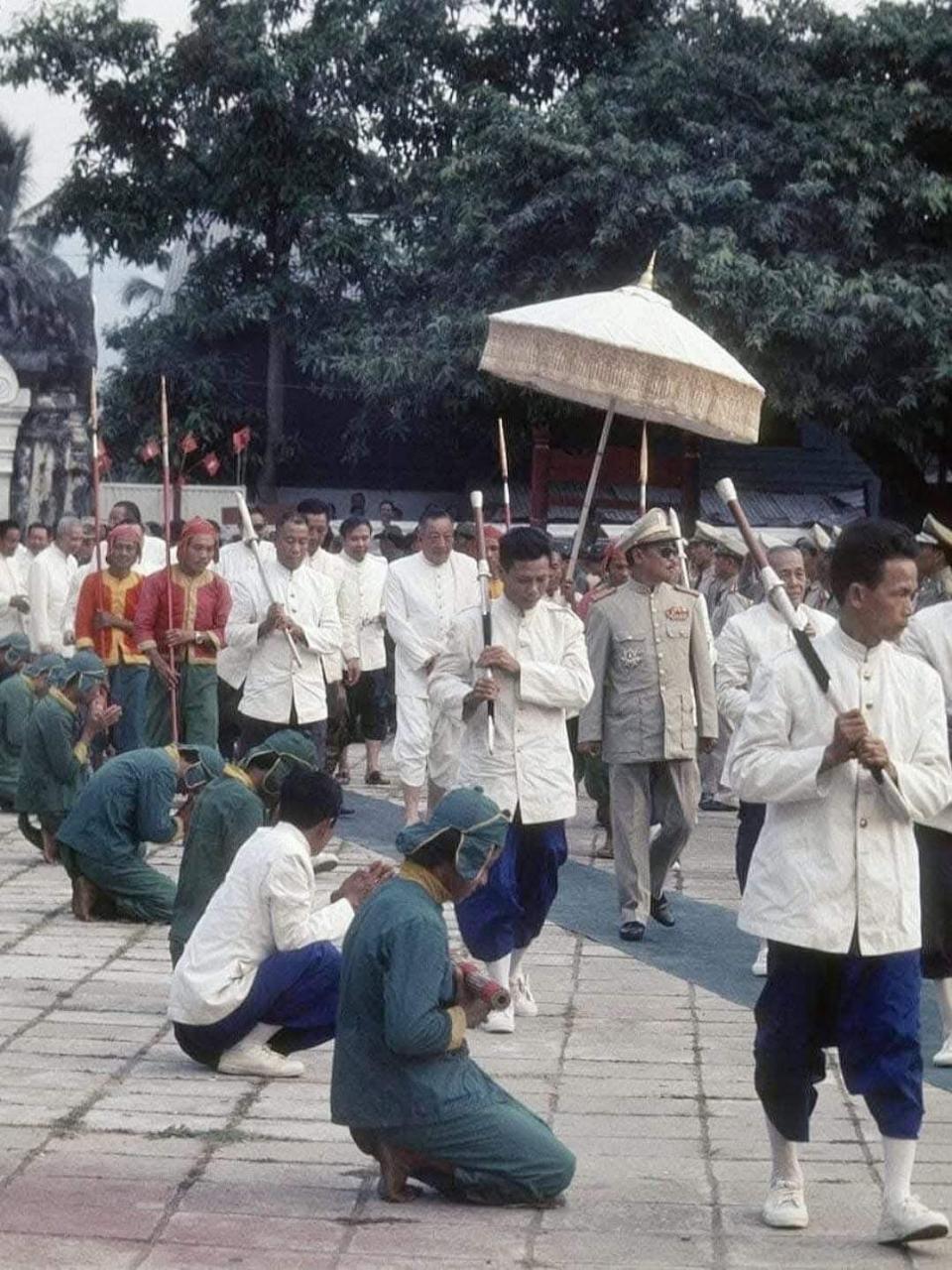
Swords of this general pattern continued to be used well into the 20th century in Laos including in court functions, although later examples at times swapped out the silver grips for carved wood. Similar patterns can be observed in more recent events even during the 1970s with the last king of Laos, Sisavang Vatthana as well as heirlooms in Lao families in modern day Isan.